When Access Requires Extra Labor
Series: Almost Accessible
This piece is part of the ongoing Almost Accessible series, where I look at the quiet ways systems filter people out — not through hostility, but through design decisions and assumptions. You can read more about the series here.
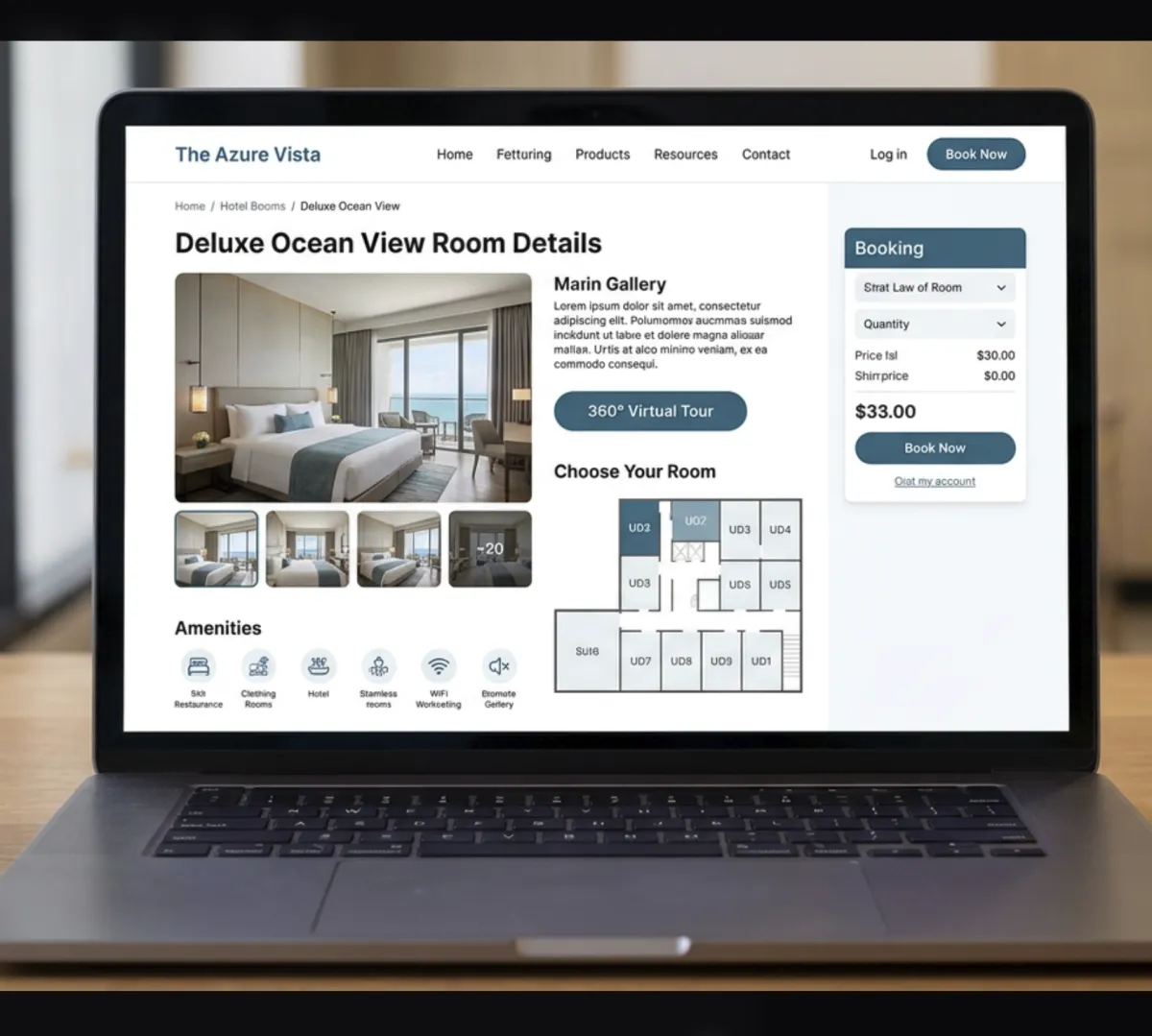
Every time we plan a trip, I open a hotel website with a familiar mix of hope and realism. Maybe this one will let me book a room the way everyone else does. Maybe I’ll be able to see what I need to see without picking up the phone.
Sometimes it almost works. A few chains now allow you to select an accessible room directly through the booking system. I can check the box. I can see that an accessible option exists. That’s progress. I don’t dismiss it.
But that’s rarely the end of the story.
The photos are glossy and incomplete. The bed looks inviting. The desk is well lit. The bathroom — which is the whole point for me — is either missing entirely or labeled “not representative.” The description says “roll-in shower,” which can mean a true zero-entry shower with proper clearance and grab bars and a built-in bench, or it can mean something that technically qualifies but doesn’t function the way I need it to.
Those differences aren’t cosmetic. They determine whether I can shower independently.
So I do what I’ve learned to do. I zoom into reflections in mirrors. I study the angle of a doorway and estimate clearance. I look at floor tiles to guess whether there’s a lip at the shower entrance. I read reviews and hope someone mentioned a wheelchair, or at least described the bathroom in enough detail to give me clues.
If I can’t confirm what I need, I call.
Sometimes I reach someone at the front desk who understands and says, “Give me a minute,” and actually goes to look. I appreciate that. I truly do. But it still means that what should have been a simple booking has turned into an extra layer of coordination in time and attention that other travelers aren’t asked to give.
Other times I’m transferred to central reservations, where the person on the line is kind but has never been inside the building. They read back the same vague description that’s already online. They don’t know the layout. They don’t know the clearance beside the bed. They don’t know whether the shower threshold is flat or raised. We do our best with limited information, and I hang up weighing whether I’m comfortable taking the risk.
On paper, the hotel offers accessible rooms. In some systems, I can even select one without speaking to anyone. From a distance, that looks like inclusion.
What isn’t visible is the extra labor woven into the process — the time, the follow-up, the quiet vulnerability of describing your needs to a stranger before you’ve even checked in. None of it is dramatic. No one is refusing me service. But the additional effort is real, and it’s consistent. And it takes a toll on both me and my husband.
Over time, that consistency shapes decisions. Some trips feel worth the extra work. Some don’t. That calculation becomes part of the planning, even if it never gets spoken aloud. It influences where we stay, how often we travel, and how much energy I’m willing to spend before I’ve even left home.
Real accessibility would mean I could see enough information upfront to make an informed decision without playing detective. It would mean the room was designed and documented with the assumption that someone like me might be booking it. It would mean access didn’t depend on how persistent I felt that afternoon.
The room exists. The question is whether the system makes it possible to trust that, without requiring me to prove it first. The door isn’t locked. It’s just heavier.
Almost accessible doesn’t look broken. It just works exactly as intended, and that’s the problem.