When Event Accessibility Stops at the Stage
Series: Almost Accessible
This piece is part of the ongoing Almost Accessible series, where I name the quiet ways systems filter people out — not because anyone stood at the door and said “no,” but because the structure was built with someone else in mind. You can read more about the series on this page.
It was the second day of a public speaking workshop in Miami when I finally looked up and really saw the stage. I had flown in from Phoenix for the event, and that detail matters more than people realize. Cross-country travel in a power wheelchair is not casual. It taked logistics, coordination, physical strain, and recovery time layered on top of the airfare and hotel bill. I paid the same registration fee as everyone else in the room. I absorbed the same financial investment. I carried a higher physical one.
By day two we were deep into breakout sessions, refining our ninety-second elevator pitches with the understanding that the stakes were real. Each group would choose one speaker to present on the main stage in front of roughly three hundred people. From there, a handful would become semifinalists. The finalists would go on to deliver their pitches in an arena at a high-end, high-energy business conference in front of thousands. This wasn’t symbolic visibility. It was a professional gateway.
The registration form had been thorough-ish. Dietary restrictions were handled carefully — gluten-free, dairy-free, nut allergies. There were no questions about accessibility, which didn’t surprise me. After more than three decades of navigating the world in a body that requires planning, I always assume I’ll handle that part myself. I book strategically. I plan redundantly. I manage the risk.
What I did not anticipate was that the final barrier would come from a room setup.
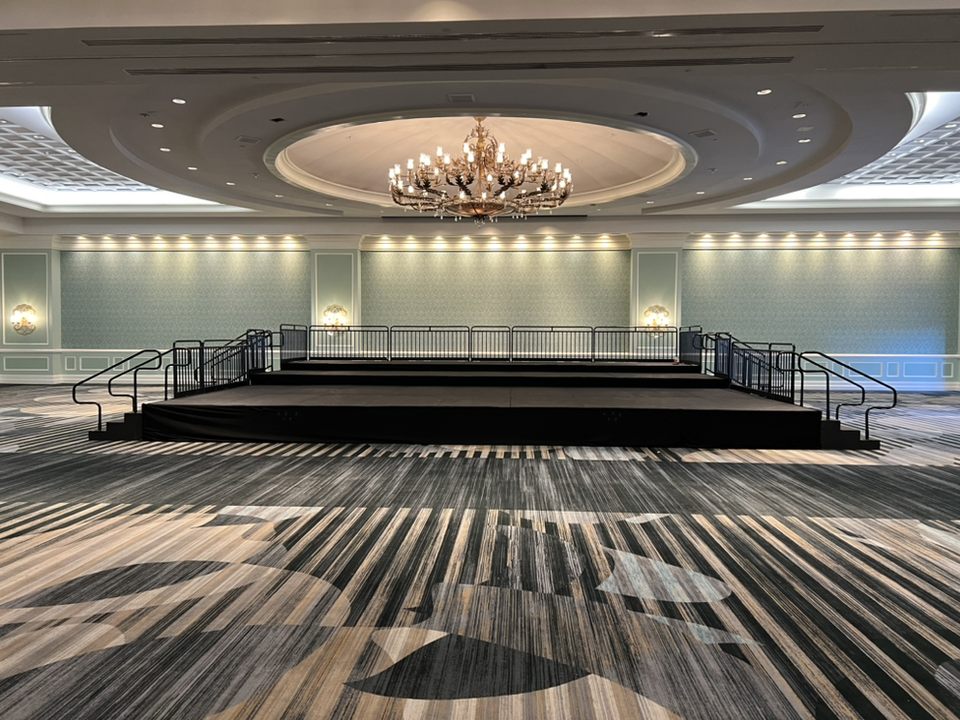
Before we split into our groups, I scanned the space the way I always do. I don’t look at the backdrop first. I look at transitions. The stage had stairs — and only stairs. No ramp. No lift. No alternate route discreetly tucked to the side. Just a polished platform and a single way up.
This wasn’t a historic building with immovable constraints. This was a hotel ballroom. Which means the stage configuration had been requested. Approved. Assembled. Someone from the conference team asked for a stage. Someone at the hotel set it up. Someone looked at it when it was complete. And at no point in that chain did anyone ask whether the path to it was usable for every speaker in the room.
The calculation was immediate and sobering. If I won my breakout group — if my pitch resonated, if I earned that advancement — I would not stand where the other semifinalists stood. I would deliver my talk from the floor, below the lighting grid, below the camera angle, below the visual framing that signals authority before you ever open your mouth.
In a competitive environment where perception shapes opportunity, that positioning is not neutral.
There was a flash of disappointment, followed by something more familiar: recalibration. Do I raise my hand and ask the question? Do I shift the tone of the room by pointing out what should have been built in from the start? Or do I conserve my energy and accept that even here — in a workshop about visibility and leadership — the infrastructure quietly decided who could fully occupy the opportunity?
No one was unkind. The organizers were thoughtful in many respects. The hotel staff did exactly what they were asked to do. That’s precisely the point. Almost accessible systems don’t require hostility. They require assumptions. Assumptions about who will be speaking. Assumptions about who needs to reach the stage. Assumptions about what “standard setup” means.
I could attend. I could participate. I could invest. I just could not access the literal platform that determined who moved forward.
There’s a certain clarity in realizing how easily this happens. We can choreograph lighting cues, curate walk-on music, and manage dietary spreadsheets, and still overlook the one design detail that defines advancement. The oversight wasn’t malicious. It was procedural. It lived in the gap between request and execution.
Real accessibility requires thinking through the entire arc of participation, not just the entry point. If advancement involves stepping onto a stage, then that stage must be reachable by everyone who earns their way there. Not as a last-minute accommodation. Not as a special request. As part of the default setup.
When accessibility stops at the stage, so does expectation of advancement.
Almost accessible doesn’t look broken. It just works exactly as intended, and that’s the problem.